
If your water heater in Houston is on its last legs, or you’re building or renovating, you’ve probably heard the buzz about tankless systems. But are they worth it for Houston homes, or is a traditional tank still the smarter move?
The truth is, it depends on your household, your budget, and how you use hot water.
Our Houston plumbing experts at Luke’s Plumbing & Air conditioning break down both options so you can make the right call when it comes to choosing between a traditional water heater and a tankless water heater in Houston.
How Traditional Tank Water Heaters Work
Tank water heaters store 30 to 80 gallons of hot water in a large cylinder, keeping it heated and ready to use. When you turn on the tap, hot water flows out, and cold water refills the tank to be reheated.
Pros:
- Lower upfront cost. Tank units typically run $800–$1,500 installed, making them the more budget-friendly option.
- Simple to replace. Most Houston homes are already set up for tank systems, so installation is straightforward.
- Reliable performance. They deliver a steady supply of hot water for simultaneous uses—like running the dishwasher while someone showers.
Cons:
- Higher energy bills. Tanks reheat water 24/7, even when you’re not using it. In Houston’s heat, that’s wasted energy.
- Takes up space. A 50-gallon tank needs a dedicated spot in your garage, closet, or utility room.
- Limited hot water. Once the tank empties, you’ll wait 30–60 minutes for it to reheat. Big families know this problem well.
Traditional water heaters last 8–12 years with proper care. If yours is approaching that age and you’re dealing with rust, leaks, or inconsistent heating, it’s probably time to consider a replacement.
How Tankless Water Heaters Work
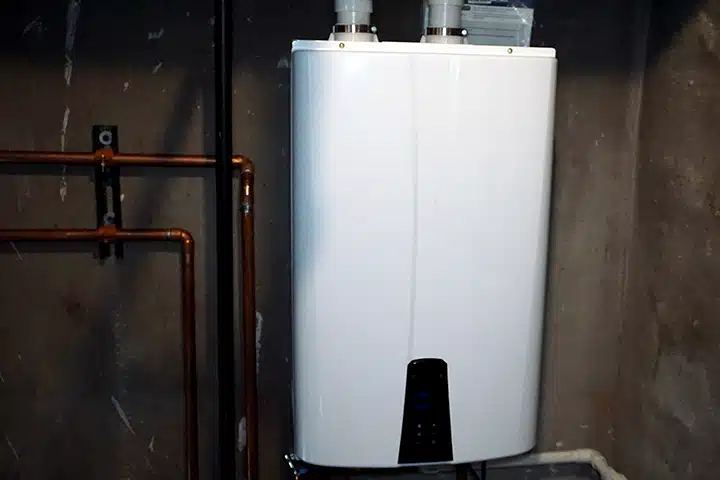
Tankless systems (also called on-demand water heaters) heat water only when you need it. Cold water runs through a heat exchanger, gets warmed instantly, and flows straight to your faucet or shower.
Pros:
- Endless hot water. No more cold showers mid-rinse. Tankless units can run indefinitely as long as demand doesn’t exceed capacity.
- Energy savings. You’re not paying to keep 50 gallons hot all day. Expect to cut water heating costs by 20–30%, which adds up in Houston’s climate.
- Compact size. These mount on the wall and free up floor space—helpful in tight garages or closets.
- Longer lifespan. Tankless water heaters typically last 15–20 years with routine maintenance.
Cons:
- Higher upfront investment. Installed costs range from $2,500–$4,500, depending on the unit size and any necessary electrical or gas upgrades.
- Flow rate limits. If multiple people shower, run laundry, and use the kitchen sink at once, a single unit may struggle to keep up. Larger homes might need two units or a high-capacity model.
- More complex repairs. When something goes wrong, repairs tend to be pricier than fixing a tank system.
The Main Differences at a Glance
Upfront cost: Traditional tanks run $800–$1,500 installed, while tankless systems cost $2,500–$4,500. That’s a significant gap, but the long-term picture tells a different story.
Energy efficiency: Tankless units heat water only when you need it, which can cut your water heating costs by 20–30%. Traditional tanks keep water hot around the clock, even while you’re asleep or at work.
Lifespan: Tank systems typically last 8–12 years. Tankless models can go 15–20 years with proper maintenance, which helps offset that higher initial price.
Hot water supply: With a tank, you’re limited by how much water it holds. Run through those 50 gallons during back-to-back showers, and you’re waiting. Tankless systems provide continuous hot water as long as you stay within the unit’s flow rate.
Space requirements: Traditional tanks need a dedicated spot on the floor—usually in your garage, closet, or utility room. Tankless units mount on the wall and take up about as much space as a suitcase.
Best fit: Tanks work well for budget-conscious homeowners and smaller households with moderate hot water needs. Tankless systems make more sense for larger families planning to stay put long enough to recoup the upfront investment through energy savings.
Which One Makes Sense for Houston Homes?
Houston’s hot, humid climate and higher-than-average energy costs make tankless systems appealing for the right household. But they’re not a universal upgrade.
Go tankless if:
- You have a larger family with high hot water demand
- You’re planning to stay in your home long-term (to recoup the upfront cost)
- You want to reduce energy bills and carbon footprint
- You need to save space in a smaller home or condo
Stick with a tank if:
- You’re on a tight budget and need an affordable replacement
- Your home’s electrical or gas system can’t support tankless without expensive upgrades
- You have moderate hot water needs and don’t mind occasional wait times
- You prefer a simpler, lower-maintenance system
One thing many Houston homeowners overlook: water quality. Our hard water can shorten the life of both systems, but it hits tankless units especially hard. Mineral buildup clogs the heat exchanger, reducing efficiency and eventually causing breakdowns. Regular water heater maintenance, like annual descaling, keeps everything running smoothly and protects your investment.
Still Not Sure? We Can Help You Decide
Choosing between tank and tankless isn’t just about features, it’s about what works for your home, your budget, and how your family uses hot water. If you’re weighing your options or dealing with an aging water heater that’s acting up, we’re here to walk you through it.
At Luke’s Plumbing & Air Conditioning, we install and service both types of systems throughout Houston. We’ll assess your home’s setup, explain your options clearly, and make sure you get a water heater that fits your needs, not just what’s trendy.
Ready to talk it through? Get in touch and we’ll help you figure out the best move for your home!
[phone_button]